Disconnected departments
Finance, production, QA, dispatch, and maintenance often operate from separate records.
Pharmaceutical Operations Platform
Connect production, finance, compliance, hygiene, dispatch, and internal control into one workflow architecture built for regulated environments.
Pharmaceutical manufacturers often run critical work across spreadsheets, email, paper evidence, disconnected systems, and department-specific tools. Cloud.Labs turns those fragments into a connected operational platform for execution, traceability, and control.
The operational gap
Finance, production, QA, dispatch, and maintenance often operate from separate records.
Signatures, receipts, training records, hygiene checks, and dispatch documents are hard to trace.
Leadership depends on people chasing updates instead of seeing the operation in real time.
Evidence exists, but it is scattered across folders, emails, spreadsheets, and paper workflows.
The platform model
The platform is organized around how a pharmaceutical company actually runs: commercial intake, supplier control, plant execution, compliance evidence, dispatch, reporting, and internal support.
Suppliers, accounts payable, collections, receipts, supplier evidence.
Production orders, internal notes, equipment readiness, reporting, operational status.
Hygiene, training, maintenance, dispatch documents, tickets, master data, admin controls.
Workflow evidence gallery
These infographics turn Architectia's platform message into tangible workflow proof. Each map shows the messy inputs, control points, exceptions, evidence, and final business outcome a regulated team needs to trust.
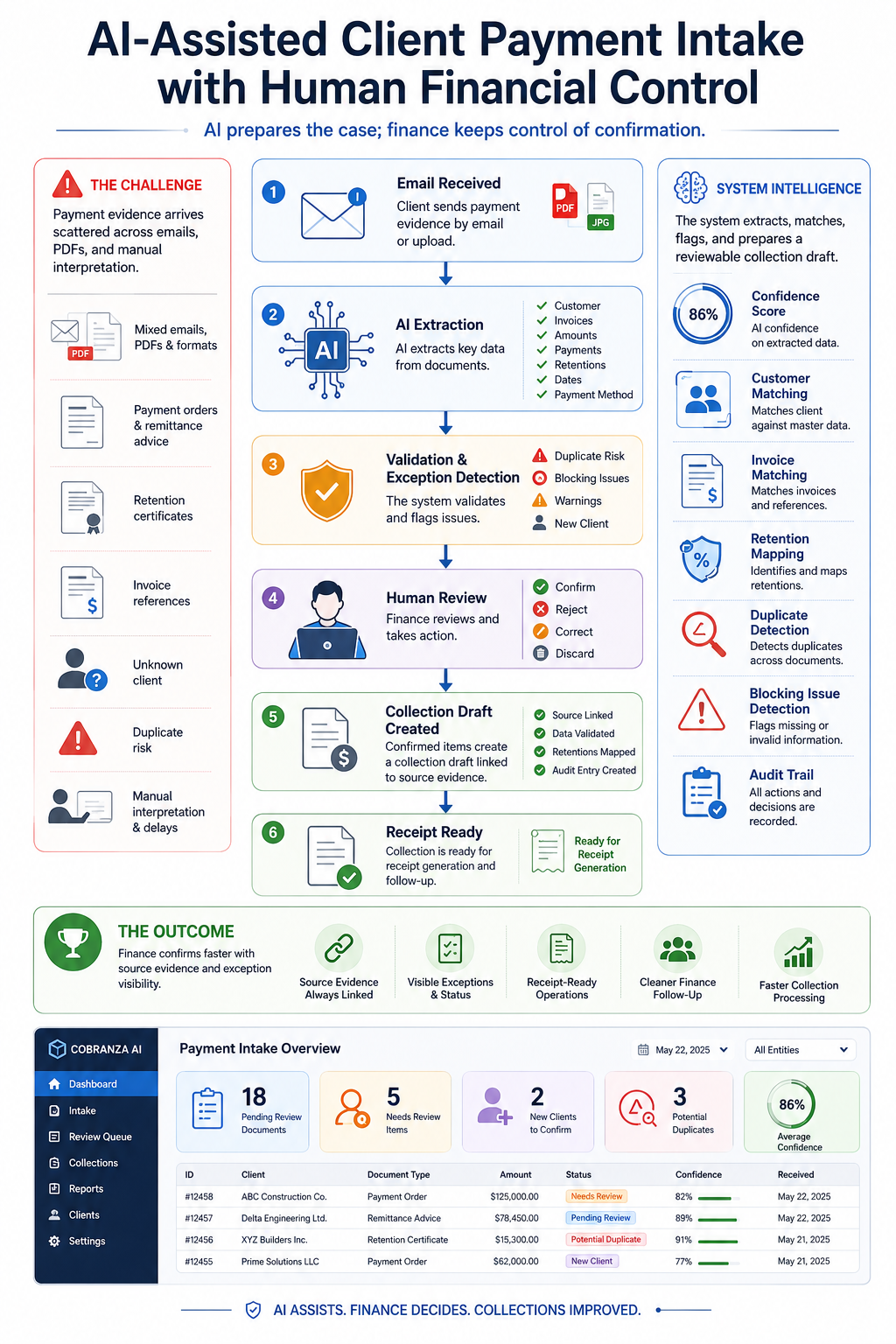
From fragmented operation to operational clarity
Instead of chasing updates across departments, leadership sees the operation as one connected system.
-Spreadsheets
-Email follow-ups
-Paper evidence
-Department silos
-Manual reporting
-Delayed visibility
+Live workflow status
+Connected modules
+Traceable evidence
+Shared operational model
+Faster execution
+Audit-ready history
We can review one workflow and show where visibility, evidence, and execution are breaking down.
Operational modules
Finance operations
Payables and collections tied to operational truth.
Manufacturing operations
Production activity becomes a shared record.
Compliance and plant control
Hygiene, maintenance, and training stay traceable.
Internal enablement
Support, admin, and permissions hold the layer together.
Built from operational reality
This architecture comes from building operational systems inside pharmaceutical manufacturing environments where speed, evidence, roles, traceability, and daily execution matter.
The system follows how departments actually work, not how software vendors wish they worked.
Evidence, permissions, history, and traceability are treated as core product requirements.
Each capability can stand alone, but together they form a reusable operating platform.
Architectia can review one workflow, map the operational gaps, and show how a connected platform could reduce manual work and improve traceability.