The problem / The product
Production teams need a dependable view of work moving between departments, equipment and approval steps.
Product creation and full-stack engineering
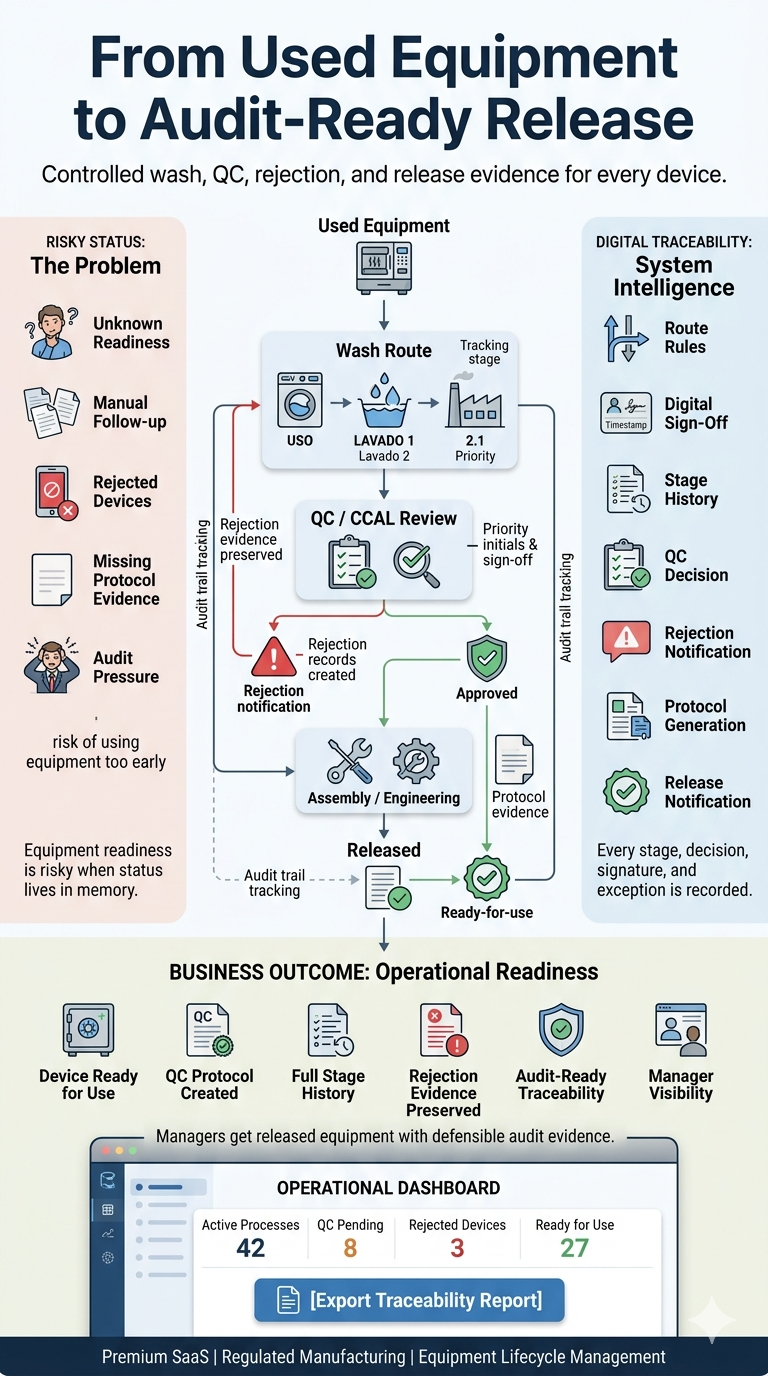
Pharmaceutical operations combine physical processes with documentation, permissions and reporting. Each handoff needs enough context for the next person to act.
What it enables. Gives teams a connected place to manage operational work and its records.
- Operational work→
- Controlled review→
- Recorded decision→
- Shared history
Experience & product scope
Who it is for. Production operators, quality teams and operational administrators.
- Central production applications and supporting operational modules.
- Reports, workflow improvements and device-backed data capture.
- Purchasing implementation with version checks, historical snapshots and safe retry handling.
Architecture & engineering
The challenge
- Keep workflow state, access rules and historical records consistent.
- Connect software to the physical operation without losing the human review step.
Engineering decisions
- Keep important business changes inside one database transaction.
- Store document snapshots so later catalogue changes do not silently rewrite earlier documents.
- Check permissions and document versions when saving or recovering a request.
Results & validation
Results
- Gives teams a connected place to manage operational work and its records.
- The purchasing implementation supports safe saves, repeat requests and preserved document history.
How it was checked
- Existing delivered operational work is described in the pharmaceutical exhibition.
- Purchasing behaviour was checked against a real API and SQL database using synthetic rehearsal data.
Pharmaceutical platform ↗ Public overview of operational modules and workflows.
Backend rehearsal. Synthetic API/SQL checks of transactions, version handling and retries; separate from production acceptance.
Product evidence
- Angular
- React Native
- TypeScript
- C#
- .NET
- SQL Server
- REST APIs